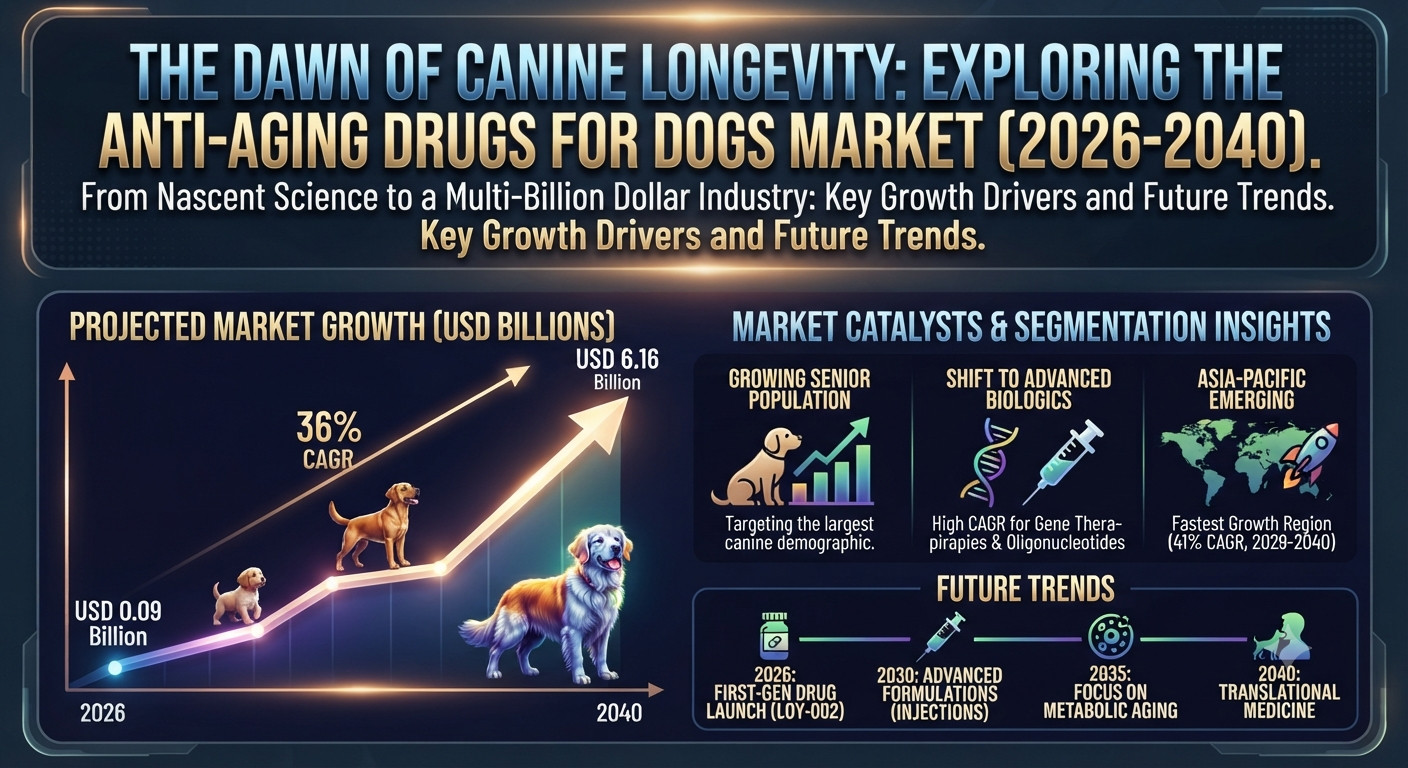


Anti-aging Drugs for Dogs Market: Industry Trends and Global Forecasts
Market Overview & Projections
Market Size (2026): USD 0.09 billion
Projected Market Size (2035): USD 6.16 billion
Growth Rate (CAGR): 36% during the forecast period from 2026 to 2035
Report Segmentation & Highlights
The market report details and structures industry opportunities across several key dimensions:
Type of Modality: Split between Biologics and Small Molecules (with small molecules capturing the entire market share in 2026, while biologics are projected to grow at a high 38% CAGR through 2035).
Type of Biologic: Includes antisense oligonucleotides, cell therapies, and gene therapies.
Route of Administration & Formulation: Explores oral vs. intravenous routes, alongside formulations like tablets (projected to hold the largest share) and injections (projected to capture roughly 70% of the market share by 2035).
Type of Aging & Target Population: Analyzes metabolic aging, cellular aging, and targets specific groups such as senior dogs, as well as large and giant dogs.
Key Market Drivers & Trends
Shift to Preventive Care: The veterinary industry is actively moving away from reactive treatments toward anticipatory medicine, aiming to preserve vital physiological functions and delay chronic conditions in middle-aged dogs.
Pet Humanization: Increasing awareness and expenditure on pet health span and longevity reflect the treatment of dogs as key family members.
Regulatory and Clinical Evolution: Supportive frameworks (such as the FDA’s Center for Veterinary Medicine recognizing lifespan extension as a valid clinical trial endpoint) are helping drive innovation.
Investments and Collaborations: Strong venture capital backing (such as funding rounds for companies like Loyal and Rejuvenate Bio) alongside strategic R&D partnerships are accelerating drug development and commercialization.
https://www.rootsanalysis.com/....reports/anti-aging-d